Finding Competence and Compassion (Part 1)

This is the fourth post in a series about my experience in the immediate aftermath of the Flight 5342 tragedy (part one: The Night It Happened). Revisiting this period is helpful to me, but reading about it may not be helpful to you. Feel free to skip this one if you might find it upsetting.
As I began my first day on the ground in Bethesda, I had real concerns about whether the U.S. government was up to the task of responding to and investigating the Flight 5342 tragedy.
The collision occurred just nine days after a tense transfer of power from President Joe Biden to President Donald Trump. The top leadership position at the FAA had been vacant until an acting administrator was appointed the day after the collision. The incoming secretary of transportation, Sean Duffy, was only two days into the job.
On Inauguration Day, the White House had announced a federal hiring freeze and a forthcoming plan to reduce the size of the federal government. On January 28 — about 24 hours before the collision — some 2 million federal employees, including the staff of the NTSB, the agency leading the investigation, received an email with a buyout offer: resign now and receive pay and benefits through September.
And then, of course, there was the fact that the federal government itself — most notably the FAA and the U.S. Army — played a central role in the tragedy.
Would there really be a desire to uncover all the facts, or would it be easier just to point fingers and shift blame?
As the family assistance operations gradually came to life during my first morning in Bethesda, my worries began to fade.
The operation, led by the NTSB, was well-organized and professional. My sister, Amanda, and I approached the check-in desk once it opened, explained who we were, presented our identification, posed for headshots, and were issued photo ID badges granting us ongoing access to the family area.
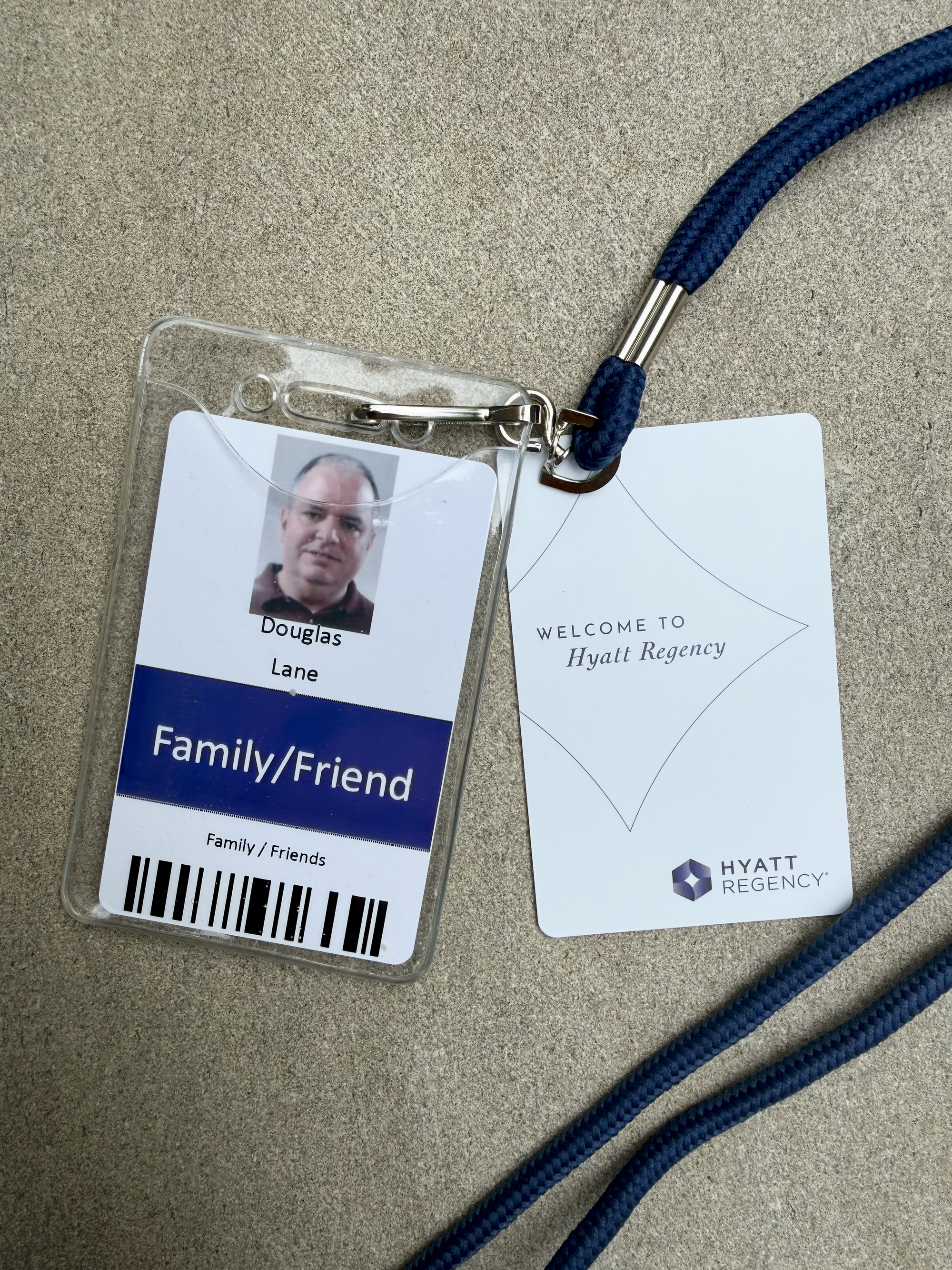
The staff members explained that our first step should be connecting with the point person on site from the D.C. Office of the Chief Medical Examiner, a woman named Kathy.
To the left of the desk, a series of interview rooms had been set up, and we could see Kathy occasionally buzzing between them.
After a short wait, it was our turn to meet with Kathy and the team assisting her. Amanda and I were led to a room, where a member of the team explained that he would be interviewing us to learn as much as possible about Christine and Spencer to help inform the recovery and identification process. General appearance. Distinguishing marks or tattoos. Past broken bones or other injuries. Clothing or jewelry they were likely wearing on the day of the flight. Contact details for physicians and dentists. Any photos that might be useful.
He also mentioned DNA samples, but I explained that I would be useless there: Christine was not a blood relative, and Spencer joined our family through adoption.
As the interview progressed, I found the simple questions incredibly difficult to answer. My brain was still in a fog, and I struggled to remember obvious details, like which arm Christine’s tattoo was on — a large ampersand, there to remind her that even in middle age, her life’s story was still not fully written. Amanda and I both scrolled feverishly through our iPhone photo libraries, looking for any evidence to compensate for the memories we couldn’t trust.
When one of us was traveling, Christine and I usually stayed in touch through frequent texts and the occasional phone call. But during their time in Wichita, we had several FaceTime calls. I would love to say that it was because she missed my handsome face. But the reality was that she wanted to see our dogs, Harley and Charlee. I had been sending pictures of them, but she needed an occasional live view of their hijinks.
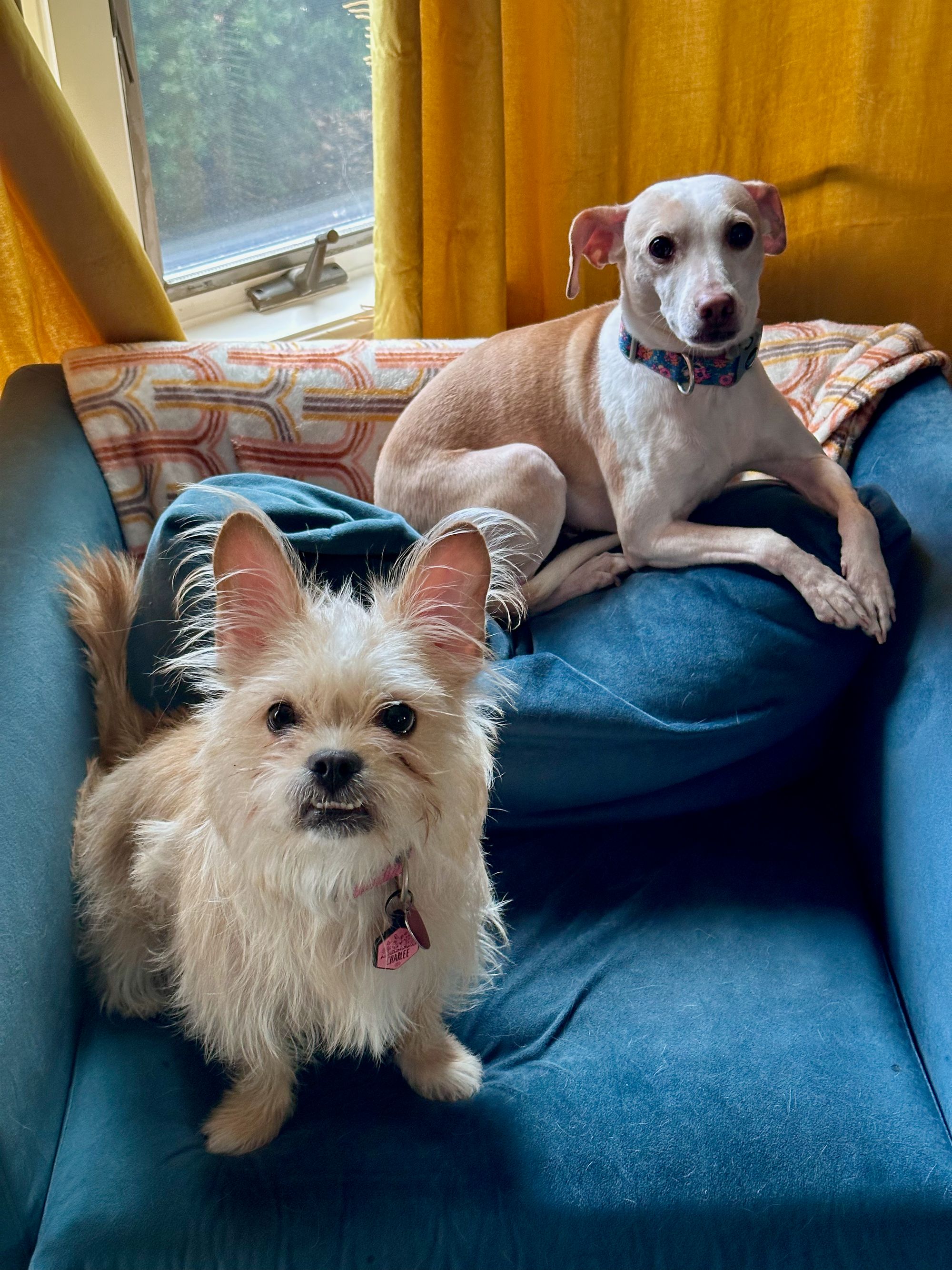
As I was scouring my phone, I realized that on the day of the collision, Christine had texted me a screenshot of her side of one of our FaceTime calls, the dogs looking silly in the main frame and a photo of her — in the shirt and sweater she was wearing for the trip home — in a small box in the corner.
The interviewer was kind and friendly and did an excellent job of putting Amanda and me at ease despite the heavy subject matter. I remember feeling empathy for him: he put on a reassuring face for us, but having these horrific conversations back to back had to be taking a toll.
It was no fault of the team on site, but I also felt frustration. In retrospect, it seems obvious that I would be asked for this type of information to aid the search. But in my state of shock and brain fog the previous day, it wasn’t obvious at all. If the American Airlines help line had provided any guidance whatsoever on what was to come, I could have spent my six-and-a-half-hour train ride assembling this information at a comfortable pace. I could have walked into that interview prepared instead of scrambling and feeling like I was failing Christine and Spencer.
On TV, the character from the medical examiner’s office is usually a slightly creepy-looking middle-aged man, emotionally detached from the human side of his work. When Kathy entered the room, it was immediately obvious that she was the opposite of this. Even though she clearly had her hands full managing this aspect of the response operation, she was fully present and projected kindness and competence. As a Korean American woman, she described how much it affected her seeing images of Spencer and his friend Jinna — younger versions of herself.
Not knowing whether Christine and Spencer had been recovered was still unbearable. But our conversation with Kathy instilled faith that everything possible was being done to help Christine and Spencer — and that they were being treated as people and not items on a to-do list.
The interview process concluded with some paperwork. It sounds simple enough, but some of the questions were things I could never have imagined needing to think about.
For example, if sometime months or even years down the road, partial remains of Christine or Spencer were found and identified, would I want a phone call, or would I rather continue my life without that knowledge?
I checked the box for the phone call.
As unpleasant as the individual steps of this process were, it actually made me feel much better. We were finally doing something to help. And the people running the show on the ground were not politicians trying to score points or deflect blame. They were intelligent professionals who felt a human connection and genuine care for the people on the flight.
They had their act together.
If you found this interesting or moving, consider making a donation to the Christine Conrad Lane Memorial Dog Park.